

Spinz casino Plinko game
Introduction
Plinko looks almost disarmingly simple at first glance. A ball drops from the top of the board, clips a series of pegs on the way down, and lands in one of several multiplier slots at the bottom. That is the whole visual idea. Yet in practice, Spinz casino Plinko can create a very specific kind of tension that many standard online slots do not reproduce in the same way.
I have spent enough time studying casino games to know that simple presentation often hides a more demanding decision layer underneath. Plinko is a good example. It does not ask the player to learn paylines, symbol values, Spinz Casino promotions guide for bonus hunters among New Zealand players rounds or feature chains. Instead, it puts the focus on distribution, risk level, hit pattern and session rhythm. For some players, that makes it clearer and more transparent than a slot. For others, it makes the swings feel more exposed because there is less visual distraction between stake and outcome.
This is exactly why the game deserves a proper breakdown. If you are considering trying Plinko at Spinz casino, the key question is not whether the interface looks easy to understand. It usually does. The real question is what the game is actually offering in terms of pace, variance, probability perception and overall playing experience. That is where Plinko becomes more interesting than it first appears.
What Plinko is and why players keep noticing it
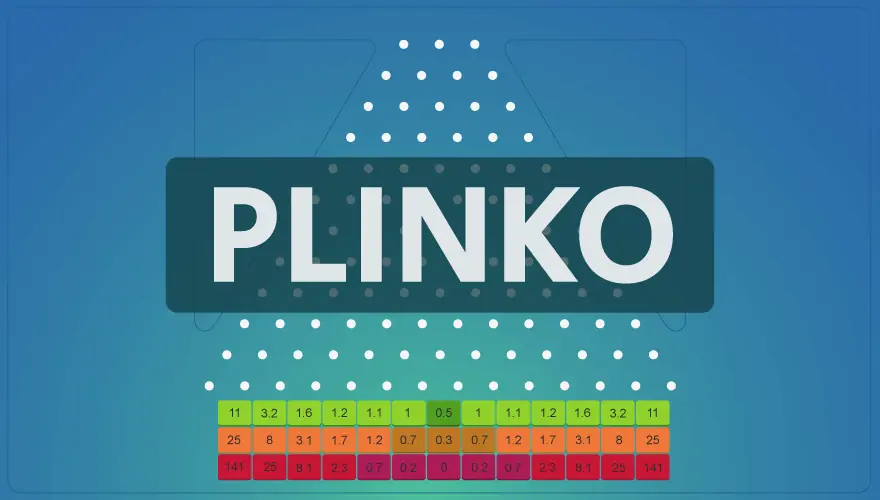
Plinko is a probability-based casino game built around a vertical pegboard. The player chooses a stake, usually selects a risk level, and then releases one ball or a sequence of balls from the top. As the ball bounces left and right off fixed pins, it moves downward until it lands in a payout segment marked with a multiplier. The final multiplier determines the return for that round.
The reason Plinko has become so noticeable is not just visibility on modern gaming platforms. It is the combination of three things:
Immediate readability. Even a first-time player understands the basic premise within seconds.
Visible randomness. You can literally watch the path unfold, which creates a stronger emotional connection to the result.
Adjustable session character. A low-risk setup and a high-risk setup can feel like two very different games, despite using the same board.
That last point matters most. Plinko is often mistaken for a casual, almost toy-like format because the board is clean and the rules are easy to follow. In reality, the selected risk setting can dramatically change how often modest returns appear, how rare larger multipliers become and how harsh a losing stretch can feel. The surface is simple. The session profile is not always simple at all.
One thing I find especially notable is that Plinko gives players a stronger sense of “watching probability happen” than many other casino products. In a slot, the result is hidden behind spinning reels and feature logic. In Plinko, the random process is staged in front of you. That does not make it more beatable, but it does make the experience feel more direct.
How the Plinko system works in practical terms
At its core, the mechanic revolves around a descending ball, a field of pegs and a row of multiplier pockets. Every collision nudges the ball left or right. Over many rounds, the distribution tends to cluster around the centre more often than the extreme edges. That is why the biggest multipliers are usually placed at the far ends, where outcomes occur less frequently.
For the player, the round structure is typically built from a few key controls:
stake size
risk level
number of rows, in versions where this is adjustable
manual drop or auto-play sequence
Each of these inputs affects the feel of the session. Stake size is obvious, but risk level is where the game really changes shape. A lower-risk setting usually compresses the payout map: fewer dramatic extremes, more middling outcomes, less explosive top-end potential. A higher-risk setting stretches the distribution: more low or empty-feeling results, fewer helpful recoveries, but access to significantly larger multipliers.
That means the same ball-drop animation can represent very different mathematical behaviour depending on configuration. Players sometimes underestimate this because the board looks nearly identical. The appearance stays familiar; the return pattern does not.
| Core element | What it does | Why it matters in a real session |
|---|---|---|
| Ball path | Determines the final landing slot through random left-right deflections | Creates suspense and makes each result feel visually traceable |
| Multiplier pockets | Set the return for the round | Define whether the session feels steady, flat or highly swing-driven |
| Risk level | Changes the payout distribution across the board | Directly affects streaks, recovery chances and top-end potential |
| Rows | Can alter the number of deflections before landing | May change the shape of the outcome spread and the feel of suspense |
| Auto-play | Runs repeated drops automatically | Speeds up bankroll exposure and can hide how quickly losses build |
A useful way to think about Plinko is this: it is not a puzzle to solve, but a distribution to choose. The player is not trying to influence the path after the drop. The meaningful decision happens before the ball falls, when choosing how aggressive or conservative the session should be.
Why the game feels engaging and how its pace affects decision-making
Plinko generates interest through rhythm rather than narrative. There are no themed bonus rounds to chase, no expanding wilds, no progressive story inside the interface. The engagement comes from repetition, anticipation and the constant possibility that an ordinary-looking drop could finish at a strong multiplier.
This creates a very distinct tempo. Rounds are short. Results arrive quickly. The visual delay between stake and outcome is just long enough to build tension, but not long enough to slow the session. That balance is one of the game’s strongest design choices. It keeps the action readable while still giving each drop a moment of suspense.
In practice, this fast cycle can work in two opposite ways:
It keeps the experience clean and focused. Players who dislike clutter often appreciate how little sits between the decision and the result.
It can accelerate bankroll turnover. Because each round resolves quickly, a session can move further than expected in a short amount of time.
This is where I think many players misread Plinko. They see a simple board and assume it is automatically a lighter format. But speed matters. A game does not need complex rules to become expensive over time. If anything, the stripped-back interface can make repeated drops feel harmless when the cumulative cost is anything but harmless.
Another memorable detail is how Plinko turns near-misses into a psychological event, even though they have no special value in mathematical terms. Watching the ball drift toward an edge multiplier and then bounce back toward the centre can feel more dramatic than a missed bonus symbol on a slot reel. The result is still random, but the visual journey gives the miss a stronger emotional shape.
How risky Plinko really is and which players it suits best
Plinko can range from relatively controlled to sharply volatile depending on the settings available. That is why broad statements about the game can be misleading. Saying “Plinko is risky” is too vague. A low-risk board and a high-risk board may produce very different session patterns, even if the layout looks almost unchanged.
From a player’s perspective, the real issue is not whether the game includes risk. It always does. The issue is how concentrated that risk becomes. In lower-risk modes, returns may appear more regularly, but they are often modest and may not build meaningful momentum. In higher-risk modes, long dry stretches can happen, while the rare larger multiplier becomes the main reason to stay in the session.
That means Plinko tends to suit players who are comfortable with one of these two approaches:
they want a fast, transparent format and are happy with small, frequent fluctuations
they consciously want a swing-heavy session with occasional high upside and understand the cost of chasing it
It is less suitable for players who need structured progression, strong thematic immersion or a sense that the game is “building toward” a bonus event. Plinko does not really build in that way. Each drop stands largely on its own. The continuity is emotional, not structural.
If someone enjoys reading reels, following feature triggers and interpreting symbol behaviour, classic slots will usually offer more texture. If someone prefers stripped-down probability with immediate feedback, Plinko may feel more honest.
What players should understand about probabilities, streaks and outcomes
The most important thing to understand before launching Plinko at Spinz casino is that visible motion does not equal visible control. You can watch the ball bounce through the board, but you are not making active in-round decisions. The randomness is simply being displayed in a more physical-looking format.
That distinction matters because Plinko can create a misleading sense of pattern recognition. After several centre landings, some players start expecting an edge result. After one high multiplier, they may assume another is unlikely for a while. In reality, each drop is governed by the game’s random structure, not by a balancing memory that owes the player a certain kind of outcome in the short term. When the support team feels slow, Aviator crash game for New Zealand players explains the fastest ways to reach them.
Here are the practical points that matter most:
Extreme multipliers are rare by design. Their visibility makes them memorable, but they are not meant to appear often.
Middle outcomes usually dominate the board. This is a consequence of the path distribution, not a sign that the game is “playing safe” for the player.
Higher-risk settings can produce longer frustrating stretches. That is the trade-off for larger top-end potential.
Fast repetition can distort judgment. A brief session can include enough rounds to feel statistically meaningful when it really is not.
I would add one more observation that players often overlook: Plinko can make a low multiplier feel more acceptable than a low return on a slot, simply because the journey to the result is visible. Psychologically, seeing the ball travel and land creates a stronger sense that “something happened,” even when the actual return is minor. That can encourage longer sessions if the player is not paying attention to net spend.
How Plinko differs from slots and other casino formats
The easiest comparison is with online slots, because that is where many players arrive from. But the differences are substantial.
| Format | Main source of engagement | What the player experiences |
|---|---|---|
| Plinko | Probability distribution and visible descent | Fast, direct outcomes with adjustable session character |
| Classic slots | Reels, symbols, paylines and feature triggers | More layered structure and stronger theme-driven immersion |
| Roulette | Bet selection before a single random event | Cleaner wagering logic but less visual path-building |
| Crash-style games | Timing and cash-out decision | More active choice during the round, higher pressure on exits |
Compared with slots, Plinko is less about combinations and more about distribution. Compared with Spinz Casino roulette review, it offers a more animated and suspenseful route to the result. Compared with crash games, it removes the pressure of deciding when to cash out, but also removes that layer of agency.
That makes Plinko a fairly unusual middle ground. It is simpler to read than a slot, but more kinetic than a table game. It feels active without being strategic in the conventional sense. For some players, this is exactly the appeal. For others, it sits in an awkward space: too repetitive to be immersive, too random to feel skill-based, too bare to replace a full-featured slot session.
Where Plinko performs well and where it shows limitations
No serious review of Spinz casino Plinko should present the game as universally suitable. Its strengths are real, but so are its limits.
The strongest practical advantages are these:
Clarity. The rules are easy to grasp without a long learning curve.
Speed. Sessions move quickly, which suits players who want immediate outcomes.
Customisable tone. Risk settings can materially change the feel of play.
Visual transparency. The route to the result is displayed rather than hidden behind spinning reels.
At the same time, there are limitations that matter just as much:
Repetition can set in quickly. Without feature variety, some players lose interest fast.
High-risk modes can become punishing. The simplicity of the interface does not soften losing streaks.
There is little sense of progression. If you enjoy building toward bonuses or unlocking layered events, Plinko may feel flat.
Fast pace can reduce discipline. Auto-play and rapid rounds can push spending beyond intention.
What I find most important is that Plinko’s strengths and weaknesses come from the same source: reduction. The game strips away complexity. That makes it accessible, but it also leaves nowhere to hide. If the chosen setup is not matching the player’s temperament, the mismatch becomes obvious very quickly.
What to check before starting a Plinko session
Before playing, I would advise any user to look at the setup with more care than the minimalist interface might suggest. Plinko is easy to launch, but not always easy to pace well.
Check the risk setting first. Do not treat this as a cosmetic option. It can redefine the entire session profile.
Set a stake that matches the speed of the game. Fast rounds amplify the effect of even modest bet sizes.
Use demo mode if available. This is one of the best ways to understand how different settings actually feel over repeated drops.
Decide whether you want entertainment or top-end chasing. Those are not always compatible goals in Plinko.
Be cautious with auto-play. It is convenient, but it can disconnect you from the rate of spend.
If I had to reduce this advice to one sentence, it would be this: choose your session style before the first drop. In Plinko, that decision matters more than many players assume.
Final verdict on Spinz casino Plinko
Spinz casino Plinko offers a very specific kind of casino experience: fast, visually transparent and heavily shaped by risk configuration. Its core appeal lies in the contrast between a simple interface and a session profile that can shift from steady to aggressive with just a few setting changes. That is what makes the game worth attention.
The strongest side of Plinko is clarity. You know what you are looking at, you understand the route to the result and you can adjust the tone of play without learning a complicated system. The main caution point is equally clear: the game’s pace and apparent simplicity can make bankroll swings arrive faster than expected, especially in higher-risk modes or auto-play sessions.
For players who want direct probability, quick rounds and less thematic clutter than a slot, Plinko can be a very good fit. For players who need deep feature variety, narrative presentation or a stronger sense of progression, it may feel too stripped back to hold attention for long.
In other words, Plinko does not succeed because it is trendy or easy to explain. It succeeds when the player understands what it really is: a clean, high-visibility format where the main choice is not how to play the round, but what kind of volatility and rhythm to invite into the session. If that sounds appealing, it is worth trying. If not, a more structured casino format will likely suit you better.
FAQ
How does Plinko on Spinz work when starting a ball drop?
Place the ball in the launch area, confirm the bet for the drop, and watch it bounce across the pegs. The ball will land in a payout zone and the multiplier applies based on where it finishes.
Before claiming any result, what should players double-check in the Plinko outcome screen?
Check that the bet amount shown matches the one selected for the last drop. Also confirm the multiplier displayed for the landing zone before continuing with another round.
What is the difference between demo mode and real-money play for Plinko?
Demo mode is designed for practicing gameplay without real-money stakes. Real-money play uses the funds tied to the casino account and any results affect the balance.
If Plinko shows no real-money option, could account verification be required?
Verification may be needed before using real-money features, depending on the account status. Completing any requested checks usually restores full access for deposits and withdrawals.
Does Spinz offer Plinko in both a quick-launch lobby flow and a full game lobby view?
Spinz typically supports quick access from the games lobby so Plinko can start with minimal steps. A fuller lobby view may also show category browsing and other casino games, but the Plinko rules stay the same once the round begins.